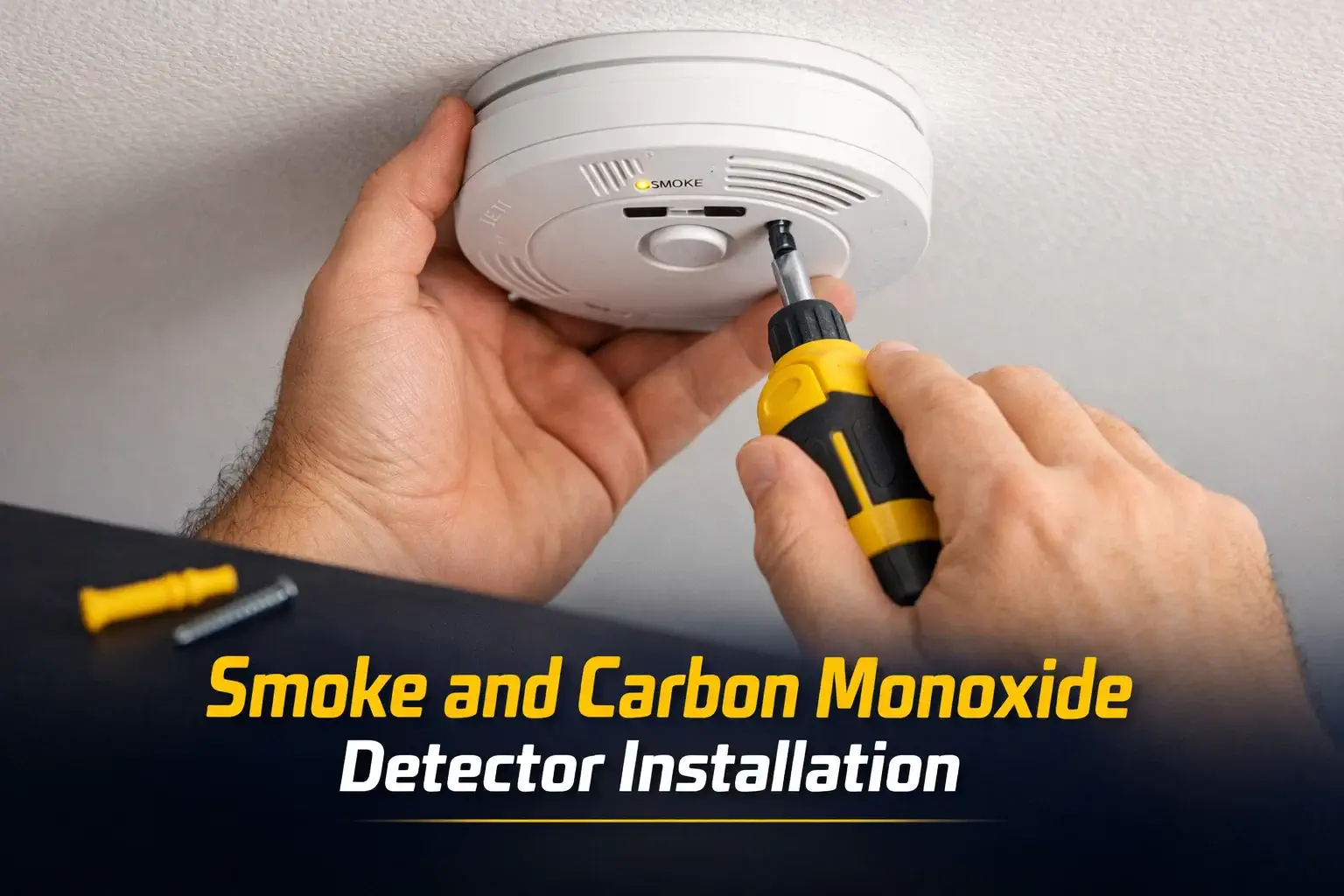
Smoke and Carbon Monoxide Detector Installation
Quick summary
- Where alarms should be installed (and where they should never be placed)
- The difference between hardwired, interconnected, and battery-powered alarms
- When you need smoke detector replacement vs smoke detector repair
- A simple way to estimate how many alarms your home actually needs
- How Farashi Electric handles installation, wiring, testing, and a clean final handoff
Farashi Electric helps homeowners choose the right smoke and carbon monoxide detector setup, install it properly, test the system for full functionality, and resolve wiring issues that cause chirping sounds, false alarms, or failed interconnection between units.
Jump to Section
ToggleWhy this isn’t a DIY “twist-and-click” job
Yes, some smoke alarms are battery-only and relatively simple to install. But most of the calls we handle involve more complex systems that require proper electrical knowledge and code compliance:
- Hardwired smoke detector installation (power connection + battery backup, integrated into your home wiring)
- Interconnected smoke detector installation (when one alarm is triggered, all units sound simultaneously)
- Combo units: Smoke and carbon monoxide detector installation (commonly installed in hallways near sleeping areas for added safety)
These are the situations where a “simple swap” often turns into unexpected issues like mismatched connectors, faulty interconnection behavior, outdated ceiling wiring, or alarms that continue chirping due to underlying circuit problems.
Placement also plays a critical role. NFPA guidelines recommend installing smoke alarms inside every bedroom, outside each sleeping area, and on every level of the home. Local regulations in Los Angeles may also have additional requirements and enforcement standards for smoke detection systems.
Need smoke or carbon monoxide detector installation in Los Angeles?
Farashi Electric installs, replaces, and tests alarm systems correctly—using secure mounting, safe wiring when required, and full functionality testing to ensure your home stays properly protected and your alarms remain reliable.
Call Farashi ElectricInstallation options: what you should choose (and why)
1) Smoke detector installation (battery-powered)
Best for: quick coverage, rental properties (in some cases), or areas where running electrical wiring is not practical.
Pros: fast installation, lower labor cost.
Cons: easier to ignore over time and more likely to be temporarily disabled by occupants (a common real-world issue).
2) Hardwired smoke detector installation
Best for: most owner-occupied homes, remodel projects, and any setup where consistent power and backup protection are a priority.
Pros: stable power supply and a cleaner, more reliable long-term system.
Cons: incorrect wiring or overloaded circuits can lead to nuisance chirping or system failures.
3) Interconnected smoke detector installation
Best for: families, multi-level homes, and anyone who needs alarms to sound throughout the entire property.
Pros: when one alarm detects smoke, all connected alarms activate for maximum warning.
Cons: a single faulty unit or wiring issue can trigger widespread alarms, sometimes unexpectedly.
Many California and county-level safety guidelines emphasize hardwired systems with battery backup and interconnected functionality in appropriate residential settings.
Smoke alarm installation: placement rules that actually prevent tragedies
Here’s a practical, homeowner-friendly checklist (not a technical code document):
Smoke alarms
- Install one inside every bedroom, outside each sleeping area, and on every level of the home
- Avoid installing in dead-air corners, directly next to bathrooms (steam), or too close to kitchens where cooking can trigger false alarms
Carbon monoxide detector installation
- Place CO detectors near sleeping areas and on levels with fuel-burning appliances or attached garages
- Follow manufacturer instructions for mounting height, since carbon monoxide behaves differently than smoke

Smoke & Carbon Monoxide Detector Installation in Glendale and Los Angeles
Farashi Electric provides residential smoke detector repair and installation in Los Angeles, Glendale, and surrounding areas. We install and replace battery-powered, hardwired, interconnected, and combo smoke and carbon monoxide detector systems with clean mounting, correct placement, wiring inspections, and full system testing. If you need smoke and carbon monoxide detector installation in Glendale, CA, or carbon monoxide detector installation near sleeping areas, gas appliances, furnaces, fireplaces, or attached garages, contact Farashi Electric for a safe, code-aware installation service.
Call for Detector InstallationReplacement vs repair: what’s the smartest move?
Smoke detector replacement
Replace when:
- The unit is old (most manufacturers and safety organizations recommend replacement around the 10-year mark)
- It continues to chirp even after battery replacement
- It triggers false alarms without a clear cause and cleaning does not resolve the issue
- You are upgrading to interconnected or combo systems
This includes:
- Smoke alarm replacement
- Carbon monoxide detector replacement
- Replace hardwired smoke detector (especially older models with outdated connectors or components)
Smoke detector repair
Repair is appropriate when:
- The alarm unit itself is functional, but smoke detector wiring has a loose or unstable connection
- The interconnect wire is miswired (often seen after DIY installations or swaps)
- There are neutral or circuit issues causing inconsistent or nuisance behavior
Farashi Electric typically tests the circuit, verifies interconnection signaling, and checks proper line/load configuration so functional devices are not replaced unnecessarily.
What Farashi Electric Checks
- Detector type: battery-powered, hardwired, interconnected, or combo units
- Wiring condition: line, neutral, ground, and interconnect wiring where applicable
- Placement: bedrooms, hallways, each level of the home, garage proximity, and appliance-adjacent areas
- System testing: each alarm, backup power source, and interconnection functionality before final handoff
If you also need electrical repair los angeles, we can address underlying electrical issues such as loose neutrals, poor splicing, or overloaded circuits instead of simply replacing alarms without fixing the root cause.
Bahram Farashi
C-10 Licensed Electrician (CA Lic. #1102687) — 10+ years installing residential/commercial Electrical Services.
FAQ
If your home has gas appliances, a furnace, a fireplace, or an attached garage, you should have carbon monoxide detector installation coverage near sleeping areas. Many homeowners choose a smoke and carbon monoxide detector installation combo unit to simplify maintenance, while larger homes often benefit from separate devices for more flexible and accurate placement. Farashi Electric can recommend the best layout during a quick walkthrough and install everything to code-compliant standards.
Yes. Farashi Electric provides smoke and carbon monoxide detector installation in Glendale, Los Angeles, Encino, Burbank, Woodland Hills, West Hollywood, and surrounding areas. We verify placement, wiring, device compatibility, and complete full system testing before finishing any job.
In most cases, yes. A replace hardwired smoke detector service is often a straightforward swap if the ceiling box and wiring are in good condition. The main challenge is compatibility—older units may use different connectors or interconnection wiring standards. We handle smoke detector replacement, inspect smoke detector wiring, confirm interconnection functionality, and test the full system to prevent future nuisance chirping or failures.
It depends on the cause. Constant chirping can indicate end-of-life, a low backup battery, or a wiring/connection issue in hardwired systems. False alarms are often caused by poor placement (steam, kitchens), dust accumulation, or a failing sensor.
We always start with diagnosis first. If possible, we recommend smoke detector repair. If the unit is outdated or unreliable, we recommend smoke alarm replacement or carbon monoxide detector replacement to restore full safety and system stability.