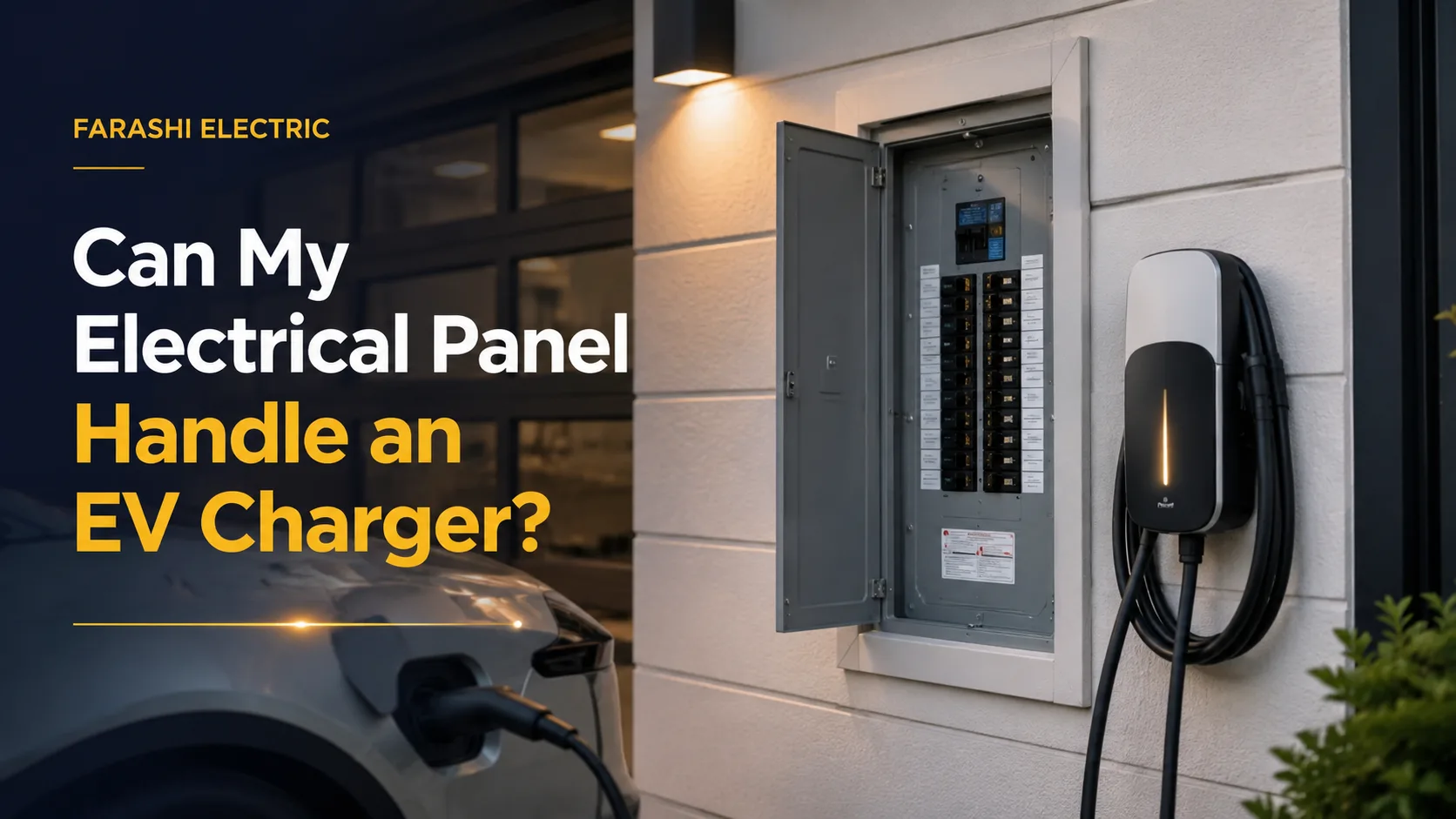
Many homeowners considering an electric vehicle ask one important question before installation: can their existing electrical system handle EV charging?
An EV charger, especially a Level 2 charger, adds a continuous electrical load to your home. While many homes can support EV charging without upgrades, others may need additional capacity depending on the panel size, existing appliances, and overall electrical demand.
Quick Answer: Can Your Electrical Panel Support an EV Charger?
Yes, many homes can support an EV charger without a panel upgrade. However, the answer depends on your available capacity, current electrical loads, and a proper load calculation. A 100-amp panel may work for some homes but may be limited in others, especially with high-demand appliances like HVAC systems, heat pumps, or electric dryers.
Need an EV charger evaluation or installation?
Farashi Electric
helps Los Angeles homeowners determine if their electrical panel can safely support an EV charger.
We evaluate panel capacity, existing electrical loads, wiring condition, and charger requirements to recommend the right solution before installation.
Whether you need a Tesla Wall Connector installation or want to know if your home needs an electrical panel upgrade, our team can help you make the right decision.
Not all EV chargers require the same amount of electrical power.
Level 1 Charger
A Level 1 charger typically uses a standard 120-volt outlet and draws less power. It is usually slower but may work for homeowners who drive shorter distances and do not need fast charging.
Because the electrical demand is relatively low, many homes can support Level 1 charging without modifications.
Level 2 Charger
A Level 2 charger is the common choice for homeowners who want faster charging at home. These systems typically use a dedicated 240-volt circuit, similar to the type of power used by electric dryers or ovens.
Examples include:
Tesla Wall Connector
ChargePoint Home chargers
Other residential Level 2 charging stations
Because Level 2 chargers operate for several hours continuously, the electrical system must have enough available capacity.
How to Know If Your Electrical Panel Can Handle an EV Charger
Several factors determine whether your panel is ready.
Check the Panel Amp Rating
The main breaker indicates the maximum current your service can provide.
Common residential services include:
100 amp service
125 amp service
150 amp service
200 amp service
However, a larger panel does not automatically mean unlimited capacity. The actual available power depends on how much electricity your home already uses.
Available Electrical Capacity
One of the biggest mistakes homeowners make is looking only at the number on the main breaker.
A panel may have:
Empty breaker spaces
A large physical enclosure
Modern-looking equipment
but still not have enough capacity for an EV charger.
Breaker space and electrical capacity are two different things.
A panel with an open slot does not necessarily mean it can safely handle another large continuous load.
Existing Electrical Loads
Before adding an EV charger, the existing loads in the home should be considered.
Important examples include:
Central air conditioning systems
Heat pumps
Electric water heaters
Electric dryers
Electric ovens
Pool equipment
Spa equipment
Solar systems
Other large appliances
A home with a gas dryer and gas stove may have plenty of capacity, while a fully electric home may already be close to its limit.
Electrical Load Calculation
A professional load calculation determines whether the service can support additional demand.
This calculation considers:
Existing appliances
Service size
Future electrical needs
EV charger rating
Continuous loads
This is much more accurate than simply asking, “Do I have a 200 amp panel?”
EV Charger Electrical Panel Requirements
Most Level 2 EV chargers require:
A dedicated 240-volt circuit
Properly sized conductors
Correct breaker size
Proper grounding and bonding
Installation according to manufacturer requirements and electrical codes
The charger should not share a circuit with other major appliances.
A properly installed system protects the vehicle, the homeowner, and the electrical equipment.
Can I Install an EV Charger With a 100 Amp Panel?
This is one of the most common questions homeowners ask.
The answer is: sometimes.
A 100-amp panel may support an EV charger if:
The home has moderate electrical usage
Major appliances are gas-powered
There is enough remaining capacity
The charger output is appropriately selected
For example, some older Los Angeles homes with 100-amp service may successfully install a lower-amperage Level 2 charger after proper evaluation.
However, an upgrade may be needed if:
The home already has high electrical demand
Multiple large appliances run at the same time
The homeowner plans future additions
The existing equipment is outdated or undersized
Replacing a panel is not always the answer. The correct solution depends on the actual electrical demand.
Tesla Wall Connector Electrical Requirements
The Tesla Wall Connector is one of the most popular home charging options.
Typical installations require:
A dedicated 240-volt circuit
Proper breaker sizing based on charging settings
Correct conductor sizing
Evaluation of available electrical capacity
One important point is that Tesla Wall Connector installations can be configured for different charging levels. A homeowner does not always need the maximum charging output.
The correct setup depends on:
Vehicle model
Driving habits
Available electrical capacity
Existing home wiring
A proper evaluation helps avoid unnecessary upgrades while still providing reliable charging.
The existing service cannot support additional load
The panel is outdated or damaged
The homeowner needs more capacity for future electrical upgrades
Additional electric appliances are planned
Many homeowners choose a electrical panel upgrade because they want their home ready for future changes, including EV charging, heat pumps, solar, and modern appliances.
However, upgrading a panel without confirming the actual need can add unnecessary cost. A professional assessment should come first.
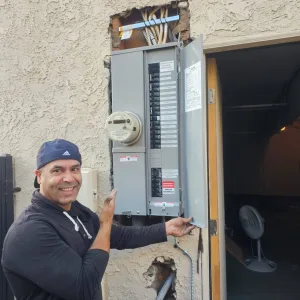
Bahram Farashi
C-10 Licensed Electrician (CA Lic. #1102687) — 10+ years installing residential/commercial Electrical Services.