EV Charger Repair Services in Los Angeles (Expert, Fast & Transparent)
If your home or business EV charger is charging slowly, repeatedly tripping breakers, displaying fault codes, or not powering on at all, this guide will help you understand the most common causes. We’ll cover a few safe checks you can perform yourself, explain when professional service is necessary, outline typical repair timelines and pricing factors, and show how Farashi Electric restores safe, dependable charging for customers throughout Los Angeles.
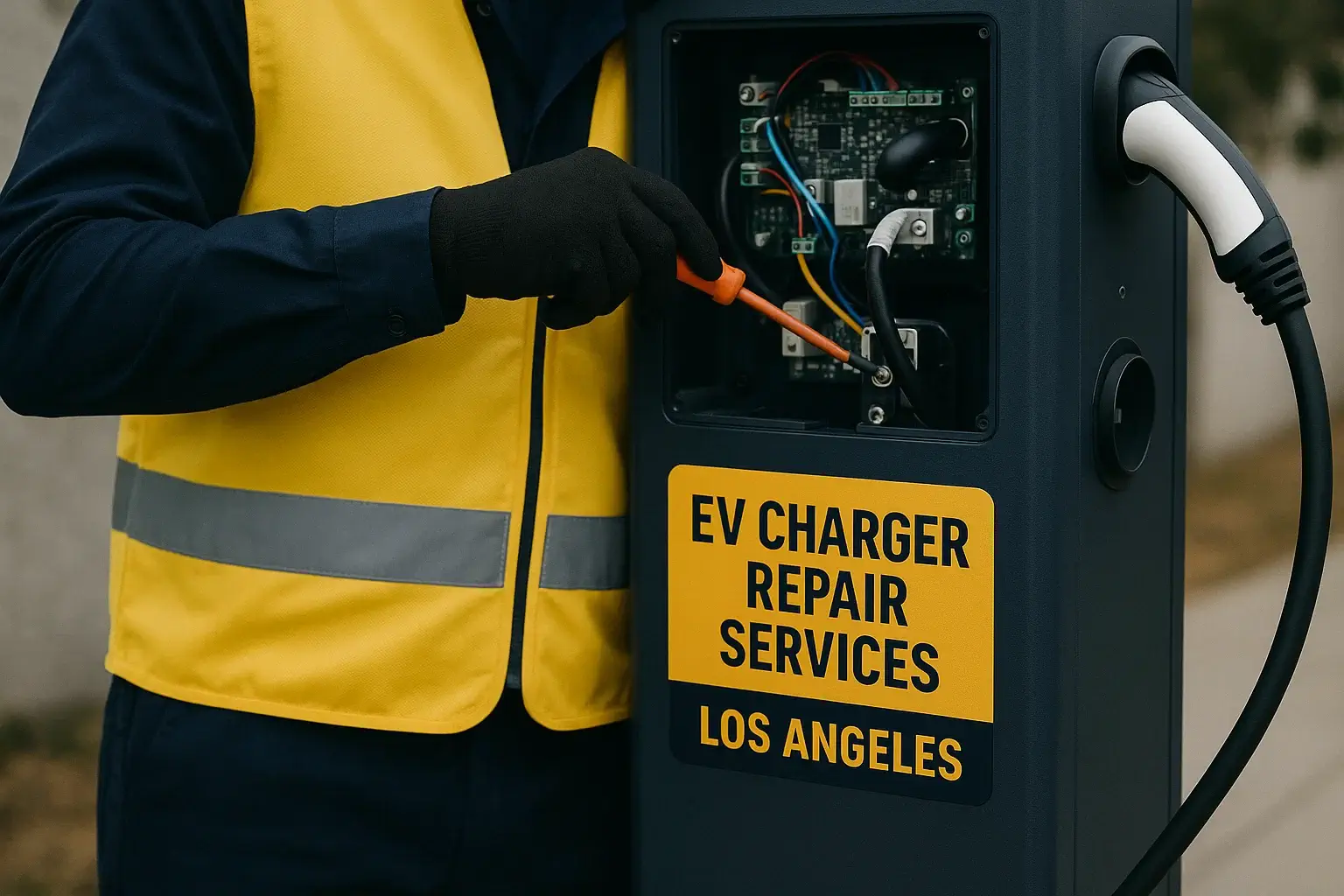
Farashi Electric provides professional ev charger repair services along with EV Charger Installation Services in Los Angeles. Whether you need troubleshooting, emergency service, warranty-related support, or system upgrades, our licensed electricians can help identify the issue and recommend the most practical solution.
Need help from a licensed professional? Schedule service with Farashi Electric and get expert electrical support from a trusted Los Angeles electrician.
Jump to Section
ToggleWhy Your EV Charger Fails (and What to Do First)
When an EV charger stops working, the cause is usually easier to identify than most people think. In many cases, the issue falls into one of the categories below.
Power Delivery Issues (Most Common)
Problems with power delivery are one of the most frequent reasons homeowners call for ev charger repair in los angeles. Loose panel connections, undersized breakers, aging aluminum branch wiring, or a worn GFCI/dual-function breaker can all lead to nuisance tripping, voltage drops, or unreliable charging performance.
Safe check: Verify that the breaker has not tripped and confirm the EVSE status lights are operating normally. If the breaker trips repeatedly, stop using the charger and contact a licensed electrician.
Load Calculation Mismatches
Electrical demand often changes over time. Adding equipment such as HVAC systems, electric ranges, water heaters, or other large appliances can push a 100A–125A service closer to its limits.
If the charger worked properly in the past but now trips more often during peak evening hours, the issue may be related to changing load conditions. A professional EV charging load calculation can determine whether circuit adjustments or load management solutions are needed.
EVSE Hardware Faults
Internal charger components can wear out over time. Failed relays, damaged contactors, moisture intrusion, worn J1772 connectors, and firmware issues can all trigger fault codes or charging interruptions.
Many charging stations can be repaired when replacement parts remain available, although older equipment may sometimes make replacement a more practical long-term solution.
Wiring and Conduit Problems
Exposure to heat, sunlight, moisture, or pests can damage wiring and conduit systems. Outdoor charging stations installed near irrigation systems or areas with frequent moisture exposure are especially susceptible to intermittent faults and GFCI trips.
Vehicle-Side Issues
Not every charging problem originates with the charger itself. Modern EVs may stop charging if they detect abnormal current requests, communication issues, or excessive charge-port temperatures.
When possible, testing the vehicle with another charging station—or testing the charger with a different vehicle—can help isolate the source of the problem.
Ready to Get Your EV Charger Back Online?
Farashi Electric provides accurate diagnostics, prompt service, and code-compliant repairs designed to restore safe, reliable charging with minimal downtime. Our team explains the problem clearly, recommends practical solutions, and completes the work to current electrical standards.
Get My EV Charger Repair EstimateQuick, Safe Homeowner Checks
Before scheduling service, there are a few basic checks you can safely perform that may help identify the problem or provide useful information for troubleshooting.
Power cycle the charger
Turn off the breaker supplying power to the EVSE for approximately 60 seconds, then restore power and see if the charger returns to normal operation.
Inspect the charging cable and connector
Look for visible cuts, sharp bends, crushed sections, or signs of overheating such as discoloration around the plug or charging handle.
Check indicator lights and app notifications
Pay attention to any error messages, flashing light patterns, or fault codes. Taking screenshots of app alerts or photos of the charger’s status lights can make diagnosis much faster.
Test a lower charging current
If your charger or vehicle allows it, temporarily reduce the charging rate (for example, from 40A to 24A). If charging becomes stable, the issue may be related to electrical load, voltage drop, or circuit capacity.
Consider recent weather conditions
Heavy rain, extreme heat, and prolonged outdoor moisture exposure can sometimes contribute to GFCI trips, charging interruptions, or thermal derating.
If you notice a burning smell, hear buzzing from the electrical panel, or see signs of heat damage, turn the circuit off immediately and contact a qualified ev charger repair technician.
Our Process: Fast Diagnostics, Clear Pricing, No Surprises
Step 1: Initial Phone Assessment
We start with a quick conversation about the symptoms you’re experiencing. We’ll typically ask about the charger brand and model, installation date, recent electrical changes, and photos of the electrical panel and charging equipment.
Step 2: On-Site Diagnostic Testing
Our electricians perform a comprehensive evaluation that may include voltage testing under load, insulation resistance testing, GFCI verification, connection inspections, and EVSE performance checks.
Step 3: Repair or Replacement
Many charging issues can be resolved during the initial visit, including loose connections, failing breakers, damaged charging components, and other common faults. When replacement parts are required, we explain the available options, expected timelines, and costs before work begins.
Step 4: Code Compliance and Warranty Support
All work is completed according to current NEC requirements and applicable Los Angeles electrical codes. When applicable, we also help support manufacturer warranty requirements and documentation.
Choosing the Right Repair Company
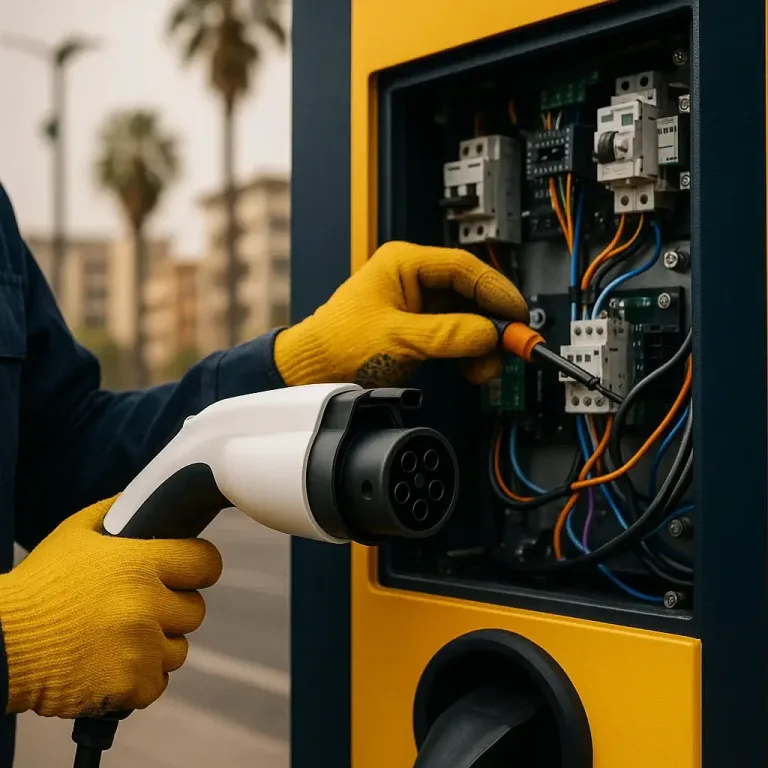
If you’re comparing providers for ev charger repair in los angeles, look for a company that provides real diagnostic data—not guesswork. Voltage readings, amperage measurements, thermal imaging results, and clear explanations help you understand exactly what failed, why it happened, and what is being done to correct it.
Pricing Ranges You Can Use for Planning
While every charging system is different, these general ranges can help you understand what typically affects the cost of ev charger repair and related electrical work.
Diagnostic visit
Typically ranges from $95–$185, and in many cases the diagnostic fee is applied toward the final repair.
Minor repairs
Generally range from $150–$450 for issues such as replacing a faulty GFCI breaker, tightening loose electrical connections, correcting terminations, or resealing junction boxes.
Charging cable or connector replacement
Most repairs involving ev charging cable repair or connector replacement fall between $250–$600, depending on equipment brand, model, and parts availability.
EVSE or Wall Connector replacement
Hardware costs vary by manufacturer and charging level. Labor for a comparable replacement installation typically ranges from $250–$650.
Panel or circuit upgrades
When service capacity, circuit sizing, or load calculations indicate a larger issue, upgrades are quoted separately and are often completed alongside Level 2 EV Charger Installation projects.
Farashi Electric always recommends the most practical and cost-effective solution. When a charger can be repaired safely and reliably, we focus on repair. When parts are no longer available or multiple components are failing, replacement may offer better long-term value.
When Repair Isn’t Enough
Some situations indicate that the problem extends beyond a simple component failure and may require system upgrades or replacement.
Common examples include:
- Repeated breaker trips during periods of high electrical demand, such as running air conditioning, cooking appliances, or EV charging simultaneously
- Water intrusion or deteriorated conductor insulation in outdoor installations
- Multiple unrelated fault codes appearing on the charging equipment
- Plans to add a second electric vehicle or upgrade from lower-amperage charging to higher-capacity charging
In these situations, a thorough evaluation helps determine whether repairs alone will provide a reliable long-term solution.
Why Homeowners Choose Farashi Electric
Farashi Electric provides professional ev car charger repair services backed by practical troubleshooting, transparent communication, and code-compliant workmanship.
Licensed and insured electricians
Our team specializes in residential EV charging systems throughout Los Angeles.
Fast scheduling
Same-day and after-hours appointments are available in many Los Angeles neighborhoods.
Clear documentation
We provide straightforward recommendations supported by photos, testing results, and clear explanations.
Brand-independent expertise
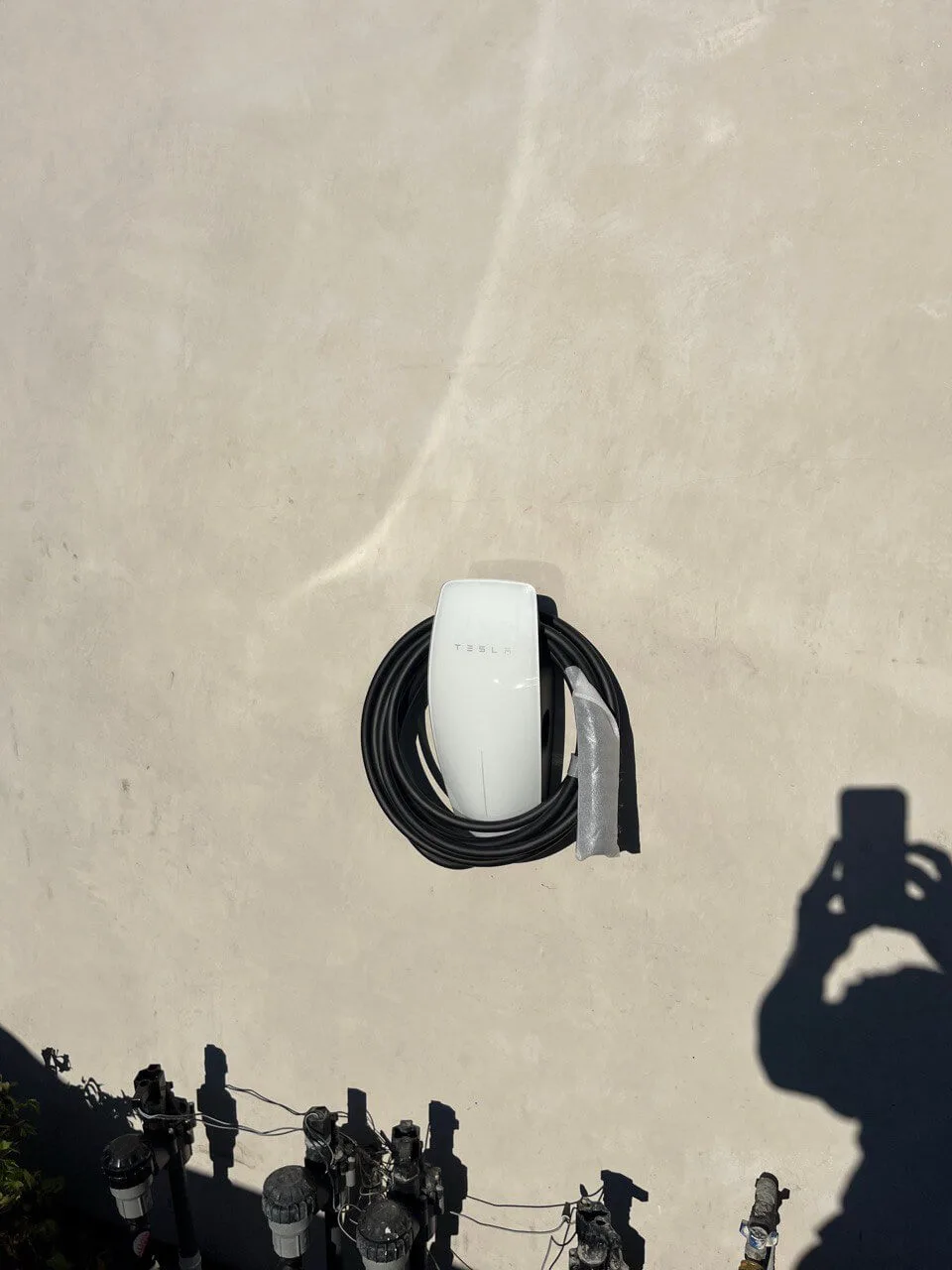
We service Tesla charging equipment as well as many third-party EV charging systems.
Safety-focused workmanship
Every repair includes attention to proper torque specifications, electrical testing, thermal inspections when needed, and compliance with current safety standards.
Already Experiencing Charging Problems?
If your charger randomly trips overnight, displays charging interruptions in the app, or the connector feels unusually warm during use, the safest approach is a professional diagnosis rather than repeated resets.
Farashi Electric can review photos of your electrical panel, charging equipment, and any fault codes before your appointment. In many cases, we can identify whether you’re likely dealing with a breaker issue, wiring problem, equipment failure, or a larger service-capacity concern before we even arrive on site.
Recent EV Charger Repair Projects
Bahram Farashi
C-10 Licensed Electrician (CA Lic. #1102687) — 10+ years installing residential/commercial Electrical Services.
FAQ (straight answers)
No. A charger that trips repeatedly is usually signaling an underlying problem such as electrical leakage, circuit overload, loose connections, or equipment failure. Continuing to use the charger without proper diagnosis can place additional stress on the charging equipment and electrical system, potentially leading to more costly repairs later.
The safest approach is to have the issue evaluated by a qualified electrician before returning the charger to regular use.
Most ev charger repair appointments can be completed within 45 to 120 minutes when the required parts are available and the issue is straightforward.
If manufacturer-specific components or specialty replacement parts are needed, Farashi Electric will explain the expected timeline and provide a clear estimate before any work moves forward.
Yes. In addition to residential charging systems, we support commercial properties, apartment buildings, condominiums, and multifamily communities.
Our technicians can diagnose load-sharing issues, charging network communication problems, OCPP-related faults, and charging infrastructure concerns while helping property owners maintain reliable service for residents, employees, and tenants.
In most cases, no.
Farashi Electric follows manufacturer-recommended procedures and uses approved replacement parts whenever available. If your equipment is still covered under warranty, we’ll help determine whether a warranty claim is the best option before recommending paid repairs.
Our goal is to protect both your equipment and your investment while providing the most practical path forward.