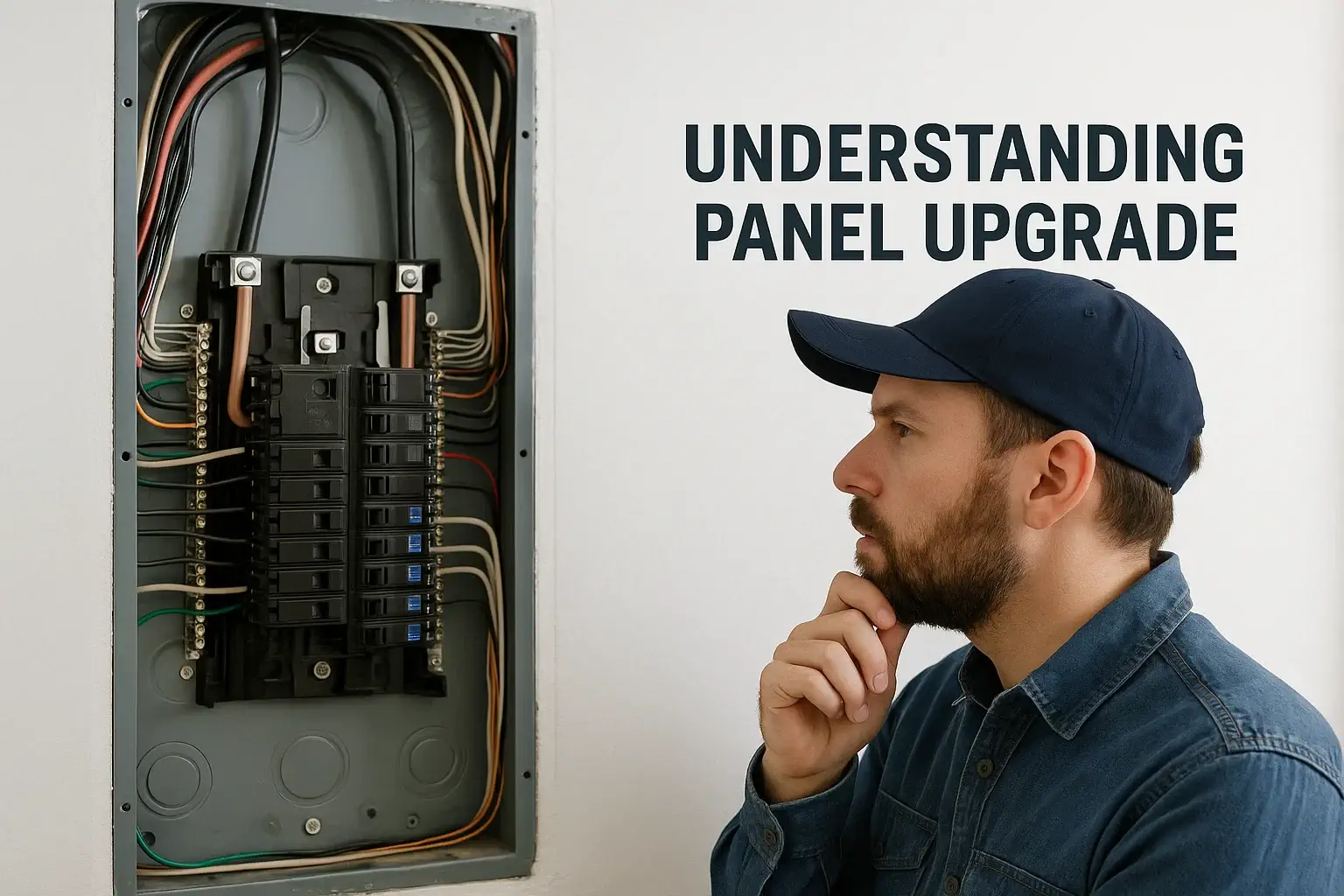
Understanding Panel Upgrade: A Clear, Homeowner-Friendly Guide
Panels shouldn’t be mysteries. If you’ve asked “what is an electrical panel upgrade?” or looked for Understanding the Basics of Residential Electrical Panel Upgrade, you’re already doing the smartest thing—getting clarity before spending money.
This guide explains what is panel upgrade, why homeowners choose it, and how to decide between repair, subpanel, or a full replacement. You’ll get Understanding Electrical Panel Upgrades equipment choices, safety/code basics, timelines, and decision checklists. If you’re comparing options or price factors for Panel Upgrade Cost in Los Angeles, this article works as an electrical panel upgrade guide to help you plan a safe, future-ready system with less stress.
Jump to Section
ToggleWhat Is a Panel Upgrade (and when do you need one)?
Definition (simple): A panel upgrade replaces your existing service equipment (meter/main and/or main breaker panel) to improve capacity, safety, and reliability. In simple terms, what is a main panel upgrade comes down to improving the part of your electrical system that distributes power throughout your home.
Common triggers: EV charger or heat pump additions, frequent breaker trips, limited space for new circuits, outdated or unsafe equipment, or remodeling and ADU plans.
Goal: Safe power delivery today with enough capacity and flexibility for tomorrow.
If your panel is healthy but you need additional circuits in one specific area (such as a garage or ADU), a Sub-Panel Upgrade in Los Angeles can be a smarter solution than replacing the entire service.
Ready to plan your panel upgrade the right way?
Clear pricing, fast scheduling, and code-compliant installs with Farashi Electric.
Ready to plan your panel upgrade the right way?
Clear pricing, fast scheduling, and code-compliant installs with Farashi Electric.
Get My Panel Upgrade EstimateUnderstanding Panel Upgrade vs. Repair vs. Subpanel
Understanding Panel Upgrade starts by ruling out cheaper, safe options:
Repair — Replace failed breakers, fix loose terminations, and correct labeling or bonding issues.
Subpanel — Add circuits where you need them while keeping the main panel as-is.
Full Upgrade — When capacity is too small, the panel is obsolete or damaged, or you’re electrifying your home with additions like EV charging, HVAC, or electric cooking.
Tip: If your load calculation shows you’re near or over capacity—or your panel has safety concerns—go straight to upgrade planning.
Your Equipment Choices: Meter-Main Combo vs Main Breaker
Choosing between Meter-Main Combo vs Main Breaker affects cost, layout, and inspection speed.
Meter-Main Combo: Meter socket and main disconnect/breakers are combined in one enclosure. It creates a cleaner setup with fewer boxes and is often ideal when relocating equipment or meeting updated clearance requirements.
Main Breaker Panel (separate meter): Flexible when the meter needs to remain in its current location or when a subpanel layout already fits the home’s needs.
Either option can be code-compliant; the right choice depends on available space, local requirements, and your future electrical demand.
What Exactly Happens During an Upgrade?
You asked for Understanding Electrical Panel Upgrades—here’s the step-by-step process (simplified):
- Assessment & photos (front/inside panel, meter, surroundings).
- Load calculation to confirm required amperage and available capacity.
- Scope selection (repair, subpanel, or full upgrade).
- Permit + utility coordination (where required).
- Install day (disconnect, swap or relocate equipment, labeling).
- Inspection and re-energize, followed by documentation.
For the most accurate requirements on permits and inspections in Los Angeles, refer to the official LADBS Electrical Permits page.
If you want the deep dive, see How to Do a Panel Upgrade for an expanded checklist.
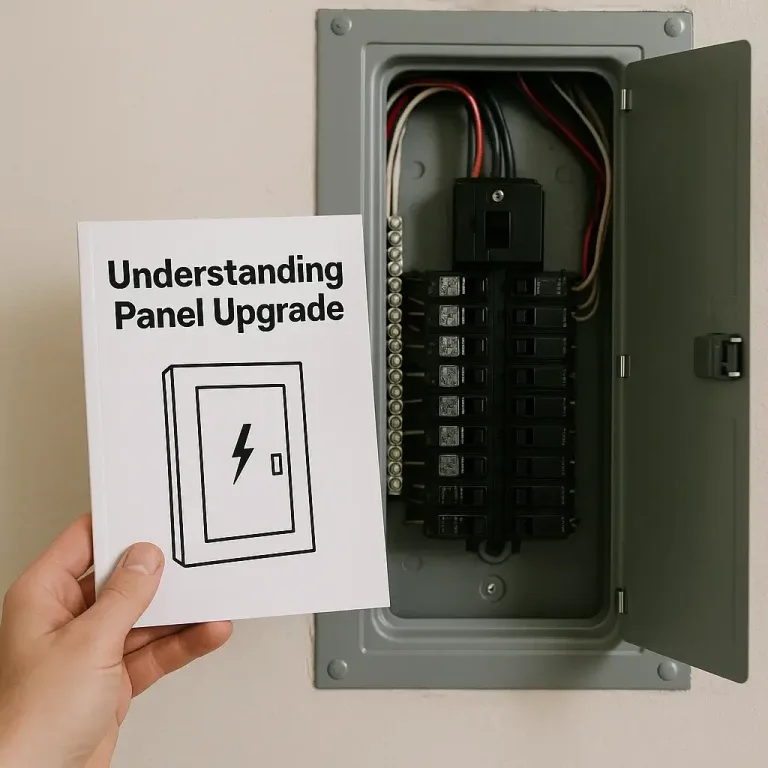
Timeline: How Long Does a Panel Upgrade Take?
Most straightforward residential upgrades are completed within one working day on the electrical side, followed by inspection and utility steps when required. If relocation, additional conduit work, or wall/finish restoration is included, the project may need extra time. For a clearer overview of timing expectations, see How Long Does a Panel Upgrade Take?
Safety & Code Notes
Listed parts only: Use breakers and accessories that are approved and listed specifically for your panel model.
Grounding & bonding: Proper grounding and bonding are essential for reliable fault clearing and improved shock protection.
Clearances & labeling: Inspectors verify proper working space and clear, readable circuit directories before approval.
Future-proofing: If EV chargers, heat pumps, or an ADU are part of your future plans, it’s better to account for those loads during the upgrade rather than requiring additional work later.
Bahram Farashi
C-10 Licensed Electrician (CA Lic. #1102687) — 10+ years installing residential/commercial Electrical Services.
FAQs (direct answers)
A panel upgrade replaces your existing main service equipment to improve safety, increase available capacity, and help your electrical system meet current code requirements.
It can reduce nuisance trips, create space for additional circuits, support higher electrical loads, and improve compliance considerations for insurance requirements or future home sales.
Not always. The right solution depends on your load calculation. In some homes, a subpanel addition or smart load management may provide enough capacity without a full service increase.
Expect a planned outage during installation. We schedule the work around your routine as much as possible and coordinate the safe re-energizing process after inspection.