How to Wire a Light: A Clear & Confident Guide by Farashi Electric
Wiring a light may look like a simple project, but proper planning, correct connections, and attention to electrical safety are essential for a reliable result. Whether you are updating existing fixtures or working with modern electrical systems, understanding electrical lighting wiring basics helps prevent common mistakes and ensures your lighting setup follows current safety standards.
In this guide, Farashi Electric explains the fundamentals of light wiring, including common 2-wire and 3-wire setups, important code considerations, and practical tips for safer installations. Our goal is to make the process easier to understand while helping homeowners recognize when professional assistance is the smarter choice.
If you are wondering how to wire a light fixture with different wiring configurations, knowing the purpose of each conductor is an important first step. From indoor fixtures to outdoor applications like Landscape Lighting in Los Angeles projects, using the correct wiring methods helps improve performance, safety, and long-term reliability.
At Farashi Electric, we focus on accurate guidance and professional solutions so homeowners can feel confident about their electrical systems.
Before starting any light wiring project, make sure you follow these essential safety steps:
- Turn off the circuit breaker and always confirm that power is completely off using a voltage tester.
- Wear rubber-soled shoes and use properly insulated tools designed for electrical work.
- Use wiring, connectors, and electrical components that are rated correctly for your specific installation.
- Never skip the grounding process — the lighting ground wire is a critical safety component and is required for proper electrical protection.
Planning to control one fixture from two different locations? Continue with our 3-way switch wiring tutorial to learn how multi-location lighting control works safely.
Wiring Fundamentals: 2-Wire vs. 3-Wire
Understanding different wiring types makes it easier to plan safe and reliable lighting installations.
2-Wire System: Common in older electrical systems. This setup usually includes Live and Switched Live conductors, without a neutral wire available inside the switch box. The switch controls the fixture by interrupting the power through the switched live conductor.
3-Wire System: Designed for modern upgrades such as timers, smart switches, and advanced controls. Adding a Neutral conductor to the switch box improves flexibility and makes future lighting improvements easier.
Short on time? Our licensed lighting installers can manage the entire process, from rough-in wiring to final fixture installation.
Your Wiring Guide: Step-by-Step
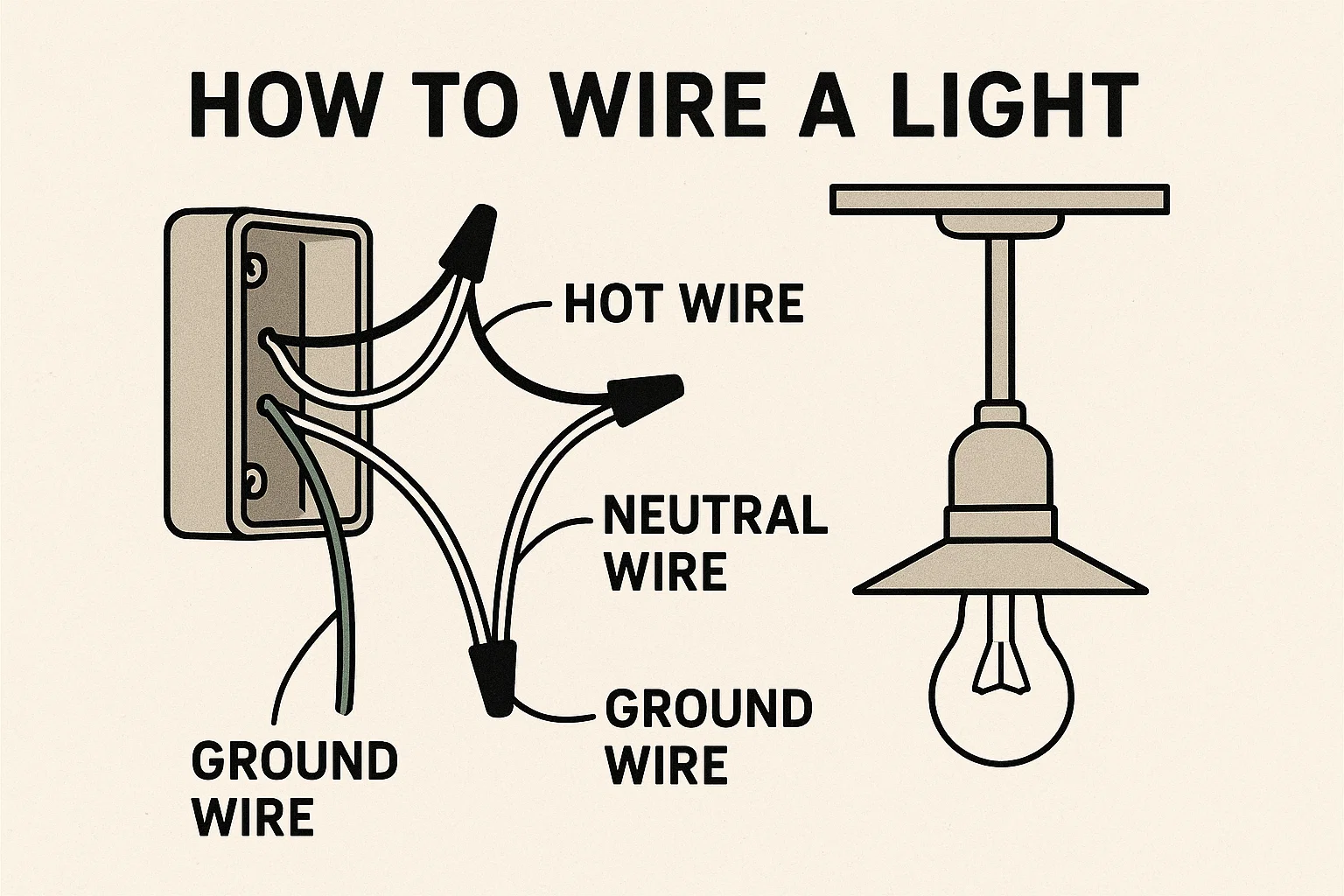
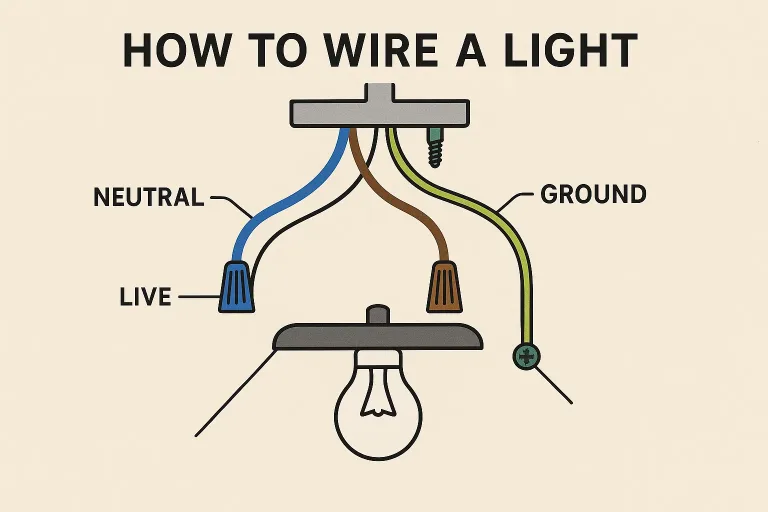
Identify the wires
Live (hot): Typically black or red and carries electrical power.
Neutral: Usually white and provides the return path for current.
Ground: Green or bare copper; this lighting ground wire must be securely connected to the fixture’s ground screw or metal electrical box for proper protection.
Connect the fixture
When replacing an older fixture with a newer wiring configuration:
- Connect neutral conductors together (white to white).
- Attach the fixture’s neutral wire to the neutral bundle.
- Connect the live conductor (usually black) to the switched live connection.
- Securely connect the ground wire to both the fixture and metal box.
For a three-way light switch setup (controlling one fixture from two locations):
- Identify the Common terminal (usually marked by a dark-colored screw).
- Connect the traveler wires to the remaining switch terminals.
- Ensure all fixtures and metal boxes are properly grounded.
Understanding the basics of wiring lighting helps homeowners recognize how different systems work, but electrical connections should always be completed with safety and code requirements in mind.
Local Code & Safety Standards
California follows the NEC with specific statewide amendments. Under LA County requirements, all electrical installations, modifications, and repairs must meet local regulations and the California Electrical Code.
Modern lighting projects also require careful planning around switch box wiring. Every switch box must include a neutral conductor when required, which helps ensure compatibility with smart devices such as timers, dimmers, and automated lighting controls.
California’s Title 24 requires energy-efficient lighting solutions for residential properties, including Landscape Lighting and indoor lighting upgrades. These standards help homeowners achieve better efficiency without sacrificing comfort, appearance, or functionality.
Expert Tips from Farashi Electric
- Always use the correct wire size for the circuit load — typically 12-gauge wire for 20A circuits and 14-gauge wire for 15A circuits in standard lighting applications.
- Install AFCI protection (Arc-Fault Circuit Interrupter) where required by code, especially on lighting circuits in living areas, to help reduce fire risks caused by electrical arcing.
- Label wires clearly with colored tape (such as hot or traveler identification) to reduce mistakes during installation and future maintenance.
If you’ve followed the steps and still feel uncertain about that final connection, don’t force it. Light fixtures may look simple, but the electrical system behind them requires proper knowledge and care.
Take a few photos of your existing light box, switch, and panel, then send them to Farashi Electric. We’ll help determine whether your setup is suitable for a DIY finish or whether a licensed Los Angeles electrician should complete the work.
FAQs
Yes, some basic fixture replacements may be manageable for experienced homeowners. However, when working with complex systems, 3-wire configurations, or code-required upgrades, it’s safer to have a qualified electrician in Los Angeles handle the installation.
Yes. Outdoor lighting requires properly rated fixtures, GFCI protection, and compliance with Title 24 standards to maintain safety, durability, and energy efficiency.
Turn the circuit off and review the connections carefully. Loose neutral wires, incorrect grounding, or improper lighting wiring can cause AFCI or GFCI protection to trip.
Absolutely. If your switch box includes neutral wiring, you’ll have better compatibility with smart dimmers, timers, and automated lighting systems.